
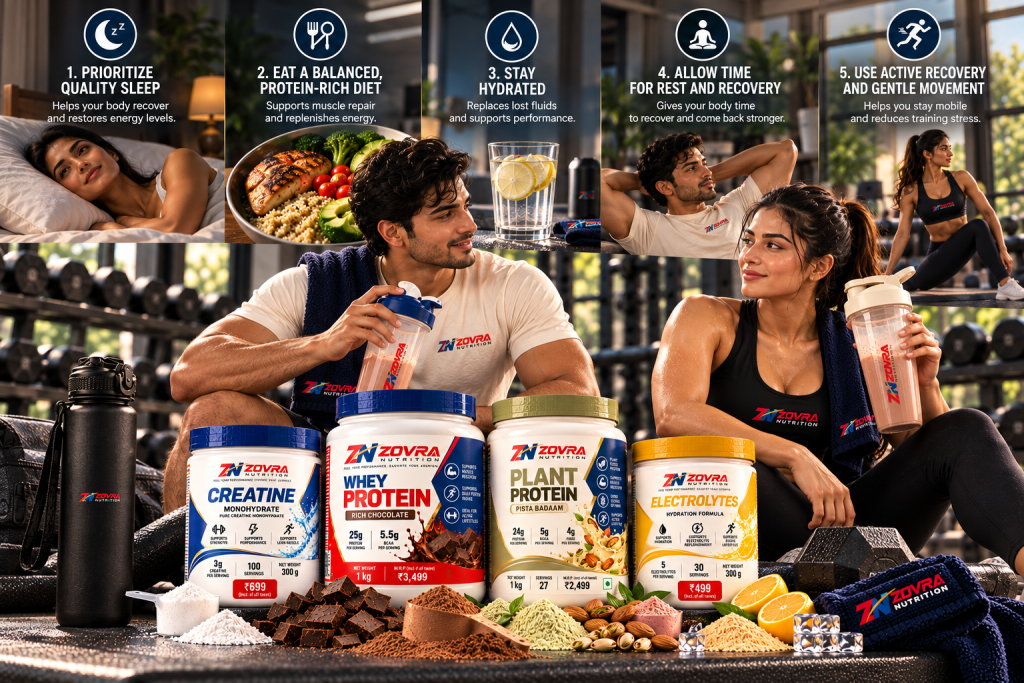
Muscle recovery is an important part of every fitness journey. After a workout, your body needs adequate rest, balanced nutrition and proper hydration to recover and prepare for your next training session. Whether you're a beginner or an experienced fitness enthusiast, developing good recovery habits can help you maintain a consistent workout routine. At ZOVRA Nutrition, we believe that fitness is not just about pushing your limits in the gym. It is also about giving your body the care and support it needs. Here are five practical ways to support muscle recovery after exercise.
1. Prioritize Quality Sleep - Sleep plays a vital role in recovery and overall well-being. During sleep, your body carries out important processes that support muscle repair and help restore energy levels.Aim for around seven to nine hours of sleep each night as an adult. Try to maintain a consistent sleep schedule, reduce screen time before bed and create a comfortable sleeping environment. Quality sleep can help you feel refreshed and ready for your next workout.
2. Eat a Balanced, Protein - Rich Diet Nutrition is essential for supporting muscle recovery. Protein provides amino acids that help repair and maintain muscle tissue, while carbohydrates help replenish energy used during exercise. Include foods such as eggs, milk, yogurt, lentils, beans, paneer, nuts, fish or lean meat according to your dietary preferences. Combining protein with nutritious carbohydrate sources, fruits and vegetables helps support a balanced diet. Protein supplements may also be convenient for people who struggle to meet their daily protein needs through food. However, supplements should complement a balanced diet rather than replace it.
3. Stay Hydrated - You lose fluids through sweat during exercise, making hydration an important part of your recovery routine. Not drinking enough water can contribute to fatigue and affect exercise performance. Drink water regularly throughout the day, including before and after your workout. If you exercise intensely or sweat heavily, an electrolyte drink may sometimes help replace lost electrolytes. Your hydration needs will depend on your activity level, environment and individual requirements.
4. Allow Time for Rest and Recovery - Training hard every day without adequate recovery can leave you feeling tired and affect your performance. Rest days give your body time to recover from demanding exercise sessions. Plan your workouts to allow sufficient recovery between intense sessions targeting the same muscle groups. Light activities such as walking, gentle stretching, or easy cycling can help you stay active on recovery days without adding excessive training stress. Listen to your body and adjust your routine when necessary.
5. Use Active Recovery and Gentle Movement - Active recovery involves low-intensity movement after demanding exercise or on rest days. Activities such as walking, gentle mobility exercises and comfortable cycling can help you remain mobile without placing heavy demands on your muscles. A gradual cooldown after training can also help you transition from intense activity to rest. Avoid forcing painful stretches or training through significant pain. Persistent or severe pain may require professional medical advice.
Final Thoughts
Muscle recovery is a combination of quality sleep, balanced nutrition, hydration, adequate rest and appropriate movement. Consistently following these habits can help you build a more sustainable fitness routine. Remember, progress is not determined by how hard you train alone, but also by how well you take care of your body between workouts. Stay consistent, recover wisely and keep moving toward your fitness goals with ZOVRA Nutrition.